Blind Test: Ipad Pro M5 vs Beelink Ser9 Pro Mini Pc - Which is Actually Better?
Category: Laptops
Introduction
Comparing an Apple iPad Pro with an M5 chip and a compact Beelink Ser9 Pro mini PC is more than a spec-sheet exercise. These devices target different philosophies: the iPad Pro emphasizes a closed, optimized mobile ecosystem with touch-first interaction and long battery life, while the Beelink Ser9 Pro brings desktop-class silicon and flexible connectivity in a tiny, living-room- or desk-friendly chassis. This blind test examines real-world workflows—productivity, creative work, media consumption, light gaming, and home-office duties—to help buyers decide which device better suits their priorities.
How this blind test was conducted
This evaluation focuses on hands-on, practical usage rather than synthetic benchmarks. Tasks chosen reflect common buyer priorities: web and document work, photo and video editing, multi-window productivity, streaming and media playback, light to moderate gaming, peripheral support (external displays, USB devices), and mobility scenarios (battery life and portability). Observations concentrate on perceived responsiveness, software fit, connectivity, and real-world trade-offs such as noise, heat, and expandability.
Detailed product analysis
Design & build
Both devices pursue minimal footprints, but each approaches it differently. The iPad Pro M5 continues Apple’s thin, lightweight tablet design. The chassis is built around a single slab of metal and glass, optimized for hand-held use and paired accessories such as the Apple Pencil and folio keyboards. The focus is on premium feel, tactile controls, and portability—ideal for users who prioritize carrying a single device everywhere.
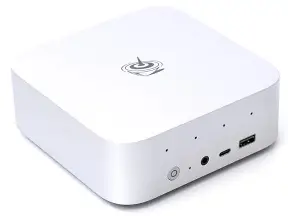
The Beelink Ser9 Pro mini PC prioritizes compact desktop presence: a small cube or rectangular chassis that fits into tight desks or AV cabinets. It trades hand-held ergonomics for port density and thermal headroom. The case is typically functional rather than decorative; rubber feet, VESA mount options, and a cluster of ports are the design hallmarks. For someone who wants a permanent desktop setup in a small form factor, the mini PC is more fitting than a tablet.
Display & input
The iPad Pro M5’s built-in display remains a major selling point: high brightness, wide color gamut, and touch sensitivity with stylus support create a fluid creative environment. For artists and designers, the Apple Pencil’s low-latency input and pressure sensitivity are compelling. The iPad’s on-screen keyboard and compact folio keyboards cover casual typing, while dedicated Bluetooth mechanical keyboards or Apple’s Magic Keyboard can convert the device into a near-laptop setup.
The Beelink Ser9 Pro relies on external displays; this is both a limitation and an advantage. Users can choose any monitor up to ultra-wide or multi-monitor arrays, which suits spreadsheets, development, and multiple windows. Input is entirely external (keyboard and mouse), which many productivity users prefer over touch for sustained typing or precise control.
Performance
Apple’s M-series chips have delivered exceptional single-thread and single-application performance in mobile form factors. The iPad Pro M5 offers impressive responsiveness in app-driven tasks: photo adjustments, compositing, and many creative tools feel fluid. However, it still operates within the constraints of iPadOS and its sandboxed app model, which can limit certain multi-process or background-heavy workflows.
The Beelink Ser9 Pro mini PC, running a desktop operating system, typically offers more flexible multi-tasking and compatibility with legacy applications. Under sustained workloads—long video exports, multi-tab browser sessions combined with virtualization, or compiling code—the mini PC’s greater thermal headroom and process scheduling can be an advantage. That said, sustained performance depends on specific CPU and cooling configurations; compact cases can still throttle under long heavy loads.
Software & ecosystem
iPadOS is curated: apps are often highly optimized for touch and the Apple silicon, which leads to very smooth daily experiences in supported applications. The trade-off is ecosystem constraints. If a buyer needs desktop-grade applications that only run on Windows or macOS, or relies on niche productivity tools, the iPad may require workarounds or alternate apps that lack feature parity.
Find top-rated Laptops & Computers products at great prices.
See Deals →The Beelink Ser9 Pro mini PC, usually running Windows (or another desktop OS), offers broad software compatibility: legacy business apps, full desktop versions of creative suites, developer toolchains, and virtualization are all possible. This makes the mini PC more adaptable to enterprise environments or technical users who need full application ecosystems.
Connectivity & ports
The iPad Pro M5 trends minimalist: a single USB-C/Thunderbolt port in most models, plus Bluetooth and Wi‑Fi. This means docks or hubs are necessary for multi-monitor setups, ethernet, or many USB peripherals. For on-the-go minimalists this is acceptable, but for users who want many wired connections at a desk, additional accessories are required.

The Beelink Ser9 Pro mini PC shines here: multiple USB ports, HDMI/DisplayPort outputs, LAN, and often more audio and expansion options out of the box. The convenience of direct wired connections without hubs is a major selling point for desk-bound users, streamers, and those who need plug-and-play external devices.
Storage, upgradeability & repairs
Apple’s tablet line typically offers fixed storage at purchase and limited repairability. Users must choose capacity up front, and internal upgrades are not possible later. This can be a constraint for those handling very large video libraries or raw photo archives.
Mini PCs often allow more flexibility: NVMe drives and RAM slots are sometimes accessible for upgrades, depending on the model. This makes a mini PC a more futu…
Thermals & noise
The iPad Pro M5 is optimized for passive or nearly-silent operation in most light-to-moderate tasks. Thermal throttling is managed at the system level and rarely noticeable in daily creative tasks. The result is quiet, cool operation in hand-held use.
Mini PCs have active cooling, and under load the Beelink Ser9 Pro can produce audible fan noise depending on workload, case design, and cooling profile. Users sensitive to noise or looking to build a media center in a quiet living room should consider thermal performance and fan control when choosing a mini PC.
Battery & power
The iPad’s battery life is a strong advantage for mobile users: a full workday away from an outlet is realistic for web, media, and light creative tasks. Fast charging and low-power standby extend usability for travel and field work.
Mini PCs are designed to be plugged in; battery life is not applicable. The advantage is constant power for long tasks without worrying about charging, but mobility depends on access to displays and peripherals.
Discover deals on Laptops & Computers — updated daily.
Shop Amazon →Real-world use cases
- Traveling creative professional: The iPad Pro M5 wins for sketching, photo edits, and client presentations on the move due to its portability and stylus input.
- Home-office power user: The Beelink Ser9 Pro mini PC is preferable for multi-monitor setups, local file servers, and software that expects a desktop environment.
- Student: If note-taking, annotating PDFs, and lightweight writing are the focus, the iPad offers an intuitive, distraction-reduced environment. For development coursework or running desktop-specific tools, the mini PC is more practical.
- Media center / streaming box: A mini PC attached to a TV or monitor provides a versatile streaming and light-gaming platform with direct HDMI and storage options.
- Light gaming and emulation: Both can handle casual titles, but the mini PC’s access to desktop titles and emulators generally offers a wider library.
Pros & cons
iPad Pro M5 — Pros
- Exceptional single-app responsiveness and low-latency touch/stylus input
- Premium display quality optimized for media and creative work
- Lightweight, pocketable for travel and fieldwork
- Long battery life and silent operation
- App ecosystem with many mobile-optimized creative and productivity tools
iPad Pro M5 — Cons
- Limited native multitasking compared to desktop OSes
- Single-port connectivity necessitates hubs for many peripherals
- Fixed internal storage and limited upgradeability
- Some professional desktop apps may be unavailable or feature-limited
Beelink Ser9 Pro Mini PC — Pros
- Desktop-grade software compatibility and flexible multitasking
- Multiple ports and direct support for multi-monitor setups
- Potential upgrade paths for storage and memory (model dependent)
- Suitable for long, sustained workloads without battery concerns
- Fits into small desks or AV cabinets while offering laptop-replacement performance for many tasks
Beelink Ser9 Pro Mini PC — Cons
- Requires external display and peripherals—less portable
- Active cooling can produce fan noise under load
- Thermals and performance may vary depending on specific configuration and case design
- Power and desk space required; not a single-device travel solution
Direct comparison
| Attribute | Ipad Pro M5 | Beelink Ser9 Pro Mini PC | Notes |
|---|---|---|---|
| Form factor | Tablet — ultra-portable | Mini desktop — compact but stationary | Choose portability vs. permanent desk use |
| Operating system | iPadOS (app ecosystem) | Windows or other desktop OS | OS drives software availability and workflow style |
| Input | Touch + stylus; optional keyboard | Keyboard & mouse (external) | Creative touch workflows favor iPad; productivity favors mini PC |
| Ports | Minimal (USB-C/Thunderbolt) | Multiple USB, video outputs, LAN | Mini PC better for many wired devices |
| Performance profile | Excellent single-app and burst performance | Stronger sustained multi-process performance | Depends on task mix and thermal limits |
| Battery | Internal battery — long life | AC powered — no battery | iPad wins for work away from outlets |
| Upgradeability | None | Possible (model dependent) | Mini PC offers more longevity for growing storage needs |
| Noise | Silent | Potential fan noise under load | Consider environment sensitivity to noise |
Buying guide — which to choose and why
Choosing between an iPad Pro M5 and a Beelink Ser9 Pro mini PC starts with identifying primary use and priorities. Below are pragmatic questions and guidance to simplify the decision.
1. Is mobility the primary concern?
If the answer is yes—frequent travel, fieldwork, or needing an all-in-one device for client visits—the iPad Pro M5 is the clear choice. It combines high-quality display, long battery life, and a compact profile that removes the need for a constant external monitor or power source.
2. Do you rely on desktop-only software?
For those whose workflows require full desktop applications (desktop-grade creative suites, specialized engineering or research software, local servers, or virtualization), the Beelink mini PC is more appropriate. It offers the flexibility to run legacy apps and a broader set of utilities without relying on cloud alternatives.
3. Will you need many wired peripherals or multiple monitors?
If docking multiple external drives, a wired LAN, and several displays matters, the mini PC’s native ports reduce the friction and expense of hubs and adapters. The iPad will work with docks but adds extra cost and potential connection complexity.
4. How important is future upgradeability?
Buyers who expect storage and RAM needs to grow should lean toward a mini PC, provided the chosen model exposes upgrade slots. The iPad locks capacity at purchase, so plan ahead for storage requirements when selecting a configuration.
5. Are noise and silent operation important?
For quiet environments, the iPad’s passive operation is advantageous. Mini PCs can be quiet in light use, but under heavier loads their fans may be noticeable.
Practical checklist before buying
- List essential apps and confirm availability on iPadOS or Windows.
- Decide whether portability or desk permanence matters more.
- Estimate storage needs for media and projects—buy extra if uncertain.
- Consider the total cost of ownership: accessories, docks, displays, and potential upgrade parts.
- Account for peripherals: if many wired devices are needed, prioritize a device with native ports.
- Test input preferences: try stylus workflows if drawing or handwritten notes are important.
Conclusion
The "better" device depends on the buyer's priorities. The iPad Pro M5 excels as a portable, highly responsive creative and media device with excellent battery life and a polished, touch-first experience. It is ideal for artists, presenters, students, and anyone who values mobility and a quiet, self-contained system. The Beelink Ser9 Pro mini PC is better suited for users who need a full desktop environment, broad application compatibility, and native connectivity for multiple peripherals and displays. It appeals to home-office professionals, developers, and anyone who prefers the flexibility and upgrade options of a desktop-class machine in a small footprint.
In short: choose the iPad Pro M5 when the primary need is mobility, battery life, and touch/stylus-driven creative work. Choose the Beelink Ser9 Pro mini PC when software compatibility, port variety, and desktop multitasking are decisive. Both deliver strong value within their intended roles; understanding which role aligns with daily tasks is the single most important factor when deciding which device is actually better for an individual buyer.